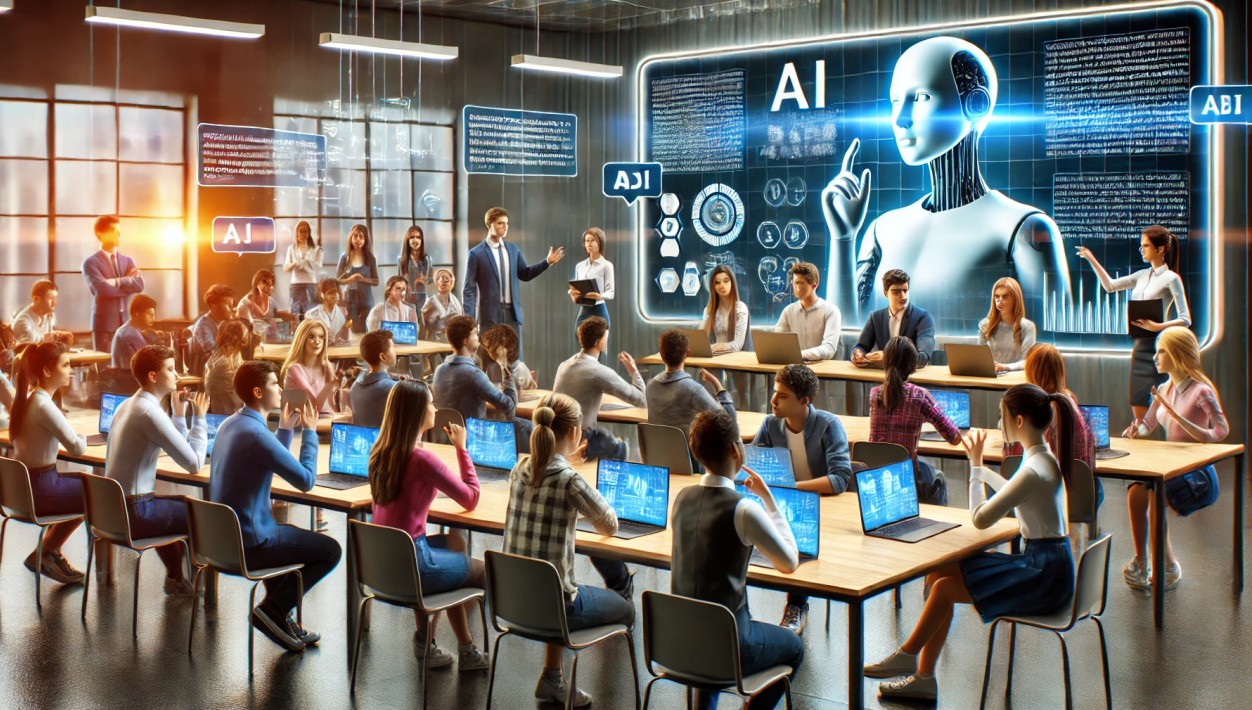
Artificial intelligence has become one of the main forces changing student education. It affects how students search for information, prepare assignments, understand difficult topics, manage time, and receive feedback. Unlike earlier digital tools, AI does not only store or deliver information. It can explain, summarize, compare, generate examples, and respond to individual questions. This makes it part of the learning process itself.
For modern students, education now happens inside a wider digital environment where academic platforms, communication tools, media, search systems, and entertainment pages such as vortex game online can exist beside study materials in the same browser session. This context matters because AI is not entering a quiet classroom. It is entering a student life already shaped by speed, distraction, and information overload.
AI as a Tool for Explanation
One of the clearest roles of AI in education is explanation. Students can ask AI systems to define terms, break down theories, compare concepts, or provide examples. This is useful when a student does not understand a lecture, misses part of a class, or needs another way to approach a topic.
Traditional education often depends on one explanation from a teacher, textbook, or lecture slide. If that explanation does not work for a student, they must search for another source. AI changes this process by allowing repeated questions. A student can ask for a simpler explanation, a more technical version, or a practical example.
This does not remove the need for teachers. Instead, it changes what students expect from learning support. They no longer need to wait for office hours or the next class to clarify a basic point. The teacher’s role becomes more focused on structure, judgment, discussion, and deeper analysis.
From Information Search to Information Evaluation
Earlier generations of students had to spend time finding information. Modern students can find too much information too quickly. AI increases this speed even more. It can produce summaries, outlines, reading lists, and draft answers within seconds.
This creates both value and risk. The value is efficiency. Students can understand the basic structure of a topic before reading in detail. They can identify main arguments, compare viewpoints, and prepare questions for class. The risk is dependence. If students accept AI output without checking it, they may learn less and repeat errors.
This means that education must place more emphasis on evaluation. Students need to ask where information comes from, whether claims are supported, and whether an answer fits the academic task. AI makes critical thinking more important, not less important.
Personalized Learning and Its Limits
AI can support personalized learning. A student who struggles with statistics can receive step-by-step help. A student learning a language can practice grammar, vocabulary, and writing. A student preparing for an exam can generate practice questions and review weak areas.
This flexibility is useful because students do not learn at the same pace. Some need repetition. Others need challenge. Some understand theory but struggle with application. AI can adjust explanations more quickly than a fixed textbook or lecture plan.
However, personalization has limits. AI may not understand a student’s full context, emotional state, or long-term academic needs. It may provide answers that seem useful but do not match the course standard. It can help with practice, but it cannot replace a teacher’s understanding of curriculum, assessment, and student progress.
Academic Integrity and the Problem of Authorship
AI has made academic integrity more complex. Students can use it to plan essays, correct grammar, summarize texts, or generate full answers. The boundary between support and substitution is not always clear.
If a student uses AI to understand a concept, that can support learning. If a student submits AI-generated work as their own, the educational purpose is weakened. The issue is not only cheating. It is authorship. Universities must decide what kind of AI use is acceptable and how students should disclose it.
Clear rules are necessary. Banning AI completely is often unrealistic because students already use digital tools in many forms. At the same time, allowing unrestricted use can make assessment unreliable. The solution is not only detection. It is task design. Assignments should require reflection, evidence, process notes, oral defense, local examples, or personal analysis that cannot be replaced by a generic answer.
Changing the Skills Students Need
AI changes the skills that students need to succeed. Memorization still matters in some fields, but it is less central when basic information can be retrieved quickly. More value is placed on asking precise questions, checking sources, interpreting results, and applying knowledge to real situations.
Students also need prompt literacy. This means knowing how to ask AI systems useful questions, refine instructions, compare outputs, and identify weak answers. It is not enough to type a question and accept the first response. The quality of the result often depends on the quality of the instruction.
At the same time, students need subject knowledge to use AI well. A person who knows nothing about a topic may not recognize a flawed answer. AI therefore does not remove the need to learn foundations. It makes foundations necessary for control.
The Teacher’s Role in an AI-Based Environment
Teachers are not made less important by AI. Their role changes. They become designers of learning conditions, evaluators of reasoning, and guides in responsible tool use. They help students understand not only what an answer is, but why it is correct, incomplete, or misleading.
Teachers also need to explain when AI is useful and when it is harmful. For example, AI may help generate practice questions, but it may weaken learning if used to avoid reading. It may help with grammar, but it should not replace original argument. It may support brainstorming, but it should not decide the student’s position.
Conclusion: AI as Support, Not Replacement
Artificial intelligence is now part of modern student education because it changes access, speed, feedback, and learning habits. It can help students understand material, organize ideas, practice skills, and study more independently. It can also create problems with attention, accuracy, authorship, and dependence.
The most important question is not whether students will use AI. They already do, and its role will continue to grow. The real question is how education should teach students to use it responsibly. AI should support thinking, not replace it. When used well, it can make learning more active. When used poorly, it can make education look easier while making understanding weaker.